
Stir-fry
Alchemy, illness, magical control of the body

Part One: Theory
I wrote the following when I was in Germany, August 2023. Titled: Microbiomic Propheticism.
I think that all foods are sentient, and trying to hurt me, and that fragmentary aspects of divine consciousness are communicating with me via the brain-gut axis. It is for this reason that I don’t like mixing or cooking my foods beyond seasoning and a light grill; it messes with the message signal.
I had been pacing the same street for an hour, trying to will myself into one of the restaurants. I was humiliated by my lack of language ability, and terrified of what my next meal had in store for me. Here I was, on the other side of the globe, and my world was narrowing, sharply, until there was nothing left but my body, and a hostile outside trying to enter me.
The streets were cobbled, just like in the movies. The dusk air was warm, inviting. I felt inside out. Vulnerable to attack. I sat down on the curb to write down another line, and I knew even then — as I scribbled it on the back of a receipt — that whatever truth the statement held for me could not outweigh its ramifications.
Following a crude alchemical concept of allergy, it’s not that I can’t eat certain foods, but that certain foods don’t want to be eaten by me.
Coming out of an extended period of illness, I had become obsessed with allergy, intolerance, nutrients and supplements. I had a long list of ingredients I wouldn’t touch for often arbitrary or ill-supported reasons. Foods couldn't be mixed, flavours were kept to a minimum. Everything had to be under my control. Every substance that entered my body was a potential enemy.
At the time, this obsession felt Just. It felt necessary. It did not occur to me that I was letting my life be controlled by eating. It did not occur to me that I was experiencing the effects of food traumatisation, a kind of overcompensation for my illness. When you experience pain, weakness, sickness, for an extended time it becomes hard to trust anything that you consume. And it is hard to go on without pinning your problems on something, anything.
When you are starved for answers, you start to search for new ways of making meaning. The problem only comes when you conflate meaning with solutions.
On a certain level, I was trying to make sense and order of my pain. I was trying to will it away through the biopsychical effects of eating. It took a long time for me to recognise that the 'healing' I was trying to force upon my body was more magical than material. Like the self-defensive shame of my youth, wherein I attempted to regain ownership over my mind by manipulating my appearance, I was consumed by a desire to be the master of my body, even as it failed me.
Part Two: Practice
"If there are no meanings, no values, no source of sustenance or help, then man, as creator, must invent, conjure up meanings and values, sustenance and succour out of nothing. He is a magician."
— R.D. Laing, The Politics of Experience
Ingredients: onion, garlic, ginger, celery, some kind of stir-fry shaped protein, capsicum, broccolini, carrot, snap peas, vibes-based selection of whatever sauces are on hand (coconut aminos, tamari, soy, teriyaki, oyster, assorted vinegars, etc.), honey, sesame oil, flat rice noodles. Probably I'm forgetting some things.
I only started cooking with meat a little over a year ago, and to be honest, stir-fry was a bit of a learning curve. I had a lot of fear around cross-contamination and proper cooking practices. My initial response to this problem was just to cook the meat first, then add the vegetables. However, I found that this would make the meat turn out tough and dry. Next, I tried cooking the meat first, then removing it to add to the vegetables later. I found this to slow down the process a lot, however, and I would find myself cutting corners and undercooking my onions. Finally, I found that the best results came from quickly searing the caramelisables (onion, garlic, ginger, celery) and then removing those to cook the meat — returning the seared vegetables to the pan immediately afterwards. This order of operations also has the subtle effect of infusing the meat with the caramelised juices.
Sauces are last, and I advocate random proportions. Trial-and-error. There's no other way to make stir-fry, sorry.
Part Three: Alchemy
The role of the alchemist is to purify, mature and perfect certain materials; to bring out any hidden or dormant qualities in a substance. This is also the role of the chef.
A recipe is a spell; a spell is a recipe. Think about how ingredients are alive and entangled psycho-chemically:
Chryspoeia: Food changes drastically when it is crushed, mixed, cooked, or left to ferment. The substance is quite literally transmuted into something new.
Elixir: Food reminds us that spirit remains, though liquid and ever-shifting, dispersing and coagulating into new forms of life, immortal. We don’t ever cease to exist, we only change forms. Some of these changes are more radical than others.
Panacea: Everything must consume or be consumed in the end. The necessity of this transference of energy reveals that there are no ills, there is only cure.
It is easy to dismiss the para-scientific endeavours of the past as charlatanism. It is perhaps even easier to accept a modern approximation of these ‘magical’ practices without truly believing, without fully understanding. These are the two dominant approaches to magic and mystery present in modern society. Neither is satisfactory.
We must walk the line between 'reality' and 'fantasy' — it is there that meaning emerges. My convictions are driven by my values; I am not concerned with 'belief'… Is it valuable because it is true, or is it true because it is valuable? Or can truth and value be separated entirely? These are the questions that come out of myth and magic for me.
Whether you do or do not ‘believe’, to view magic and alchemy, incantation and invocation, solely through a literal lens is to fail to investigate what these phenomena can communicate to us. It is to fail to apprehend the foundational role of metaphysics in our shared humanity.
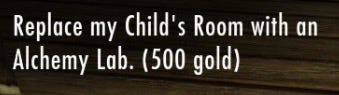
So how does one turn lead into gold? I have a few suggestions for the alchemists of old:
Time.
We are the moving force of creation. The human capacity to affect change upon our reality puts us in a unique relation with time: pausing time through the creation of enduring objects, lengthening it through repetition, and punctuating it with novelty. We experiment with time: pushing the alarm clock back 10 minutes every day, racing to the bus, juggling three tasks at once, turning the oven up so the pie will cook (or burn) quicker. We also bend to time: enduring pain just a little longer, holding back from picking the fruit so it can grow sweeter. Time is the mediator of metamorphosis.
Attention.
The question we ask of a meal is: How can the potential contained within these raw elements be transformed through purpose, plan, design? What inside each of these ingredients wants to come to light? How can I best bring these substances into relationship with each other?
Connection.
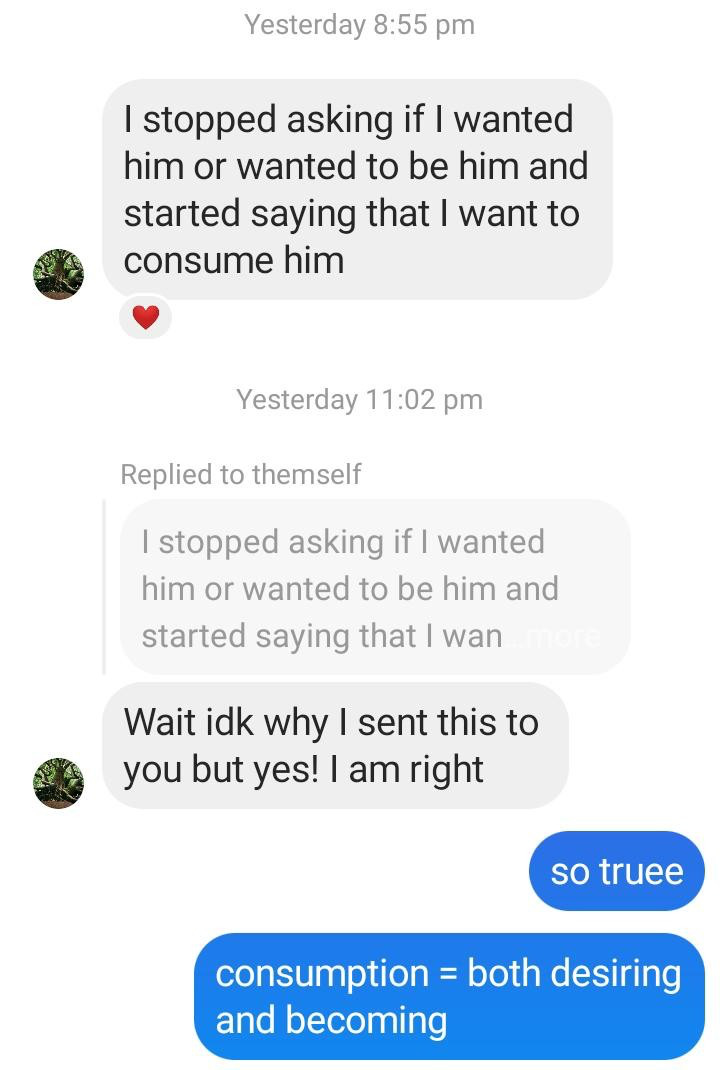
The elements of a meal exist in communion. They (ingredients) work together just as we (people) work together to make them work. On a very real level, ingredients are imbued with desire. They seek each other, just as we seek to devour. There is no illusion of separation here. We become what we consume.
Part Four: Prayer
In "Eating Disorders and Magical Control of the Body," psychotherapist and art therapist Mary Levens makes the argument that the complicated relationship with food seen in clinical eating disorder patients reflects a fear of being psychically "engulfed" by the Other. This theory is drawn from Freud's concept of "psychic cannibalism" which, Levens summarises as: "the belief that incorporating parts of a person’s body through the act of eating will lead to the acquisition of that person’s qualities." In this way, a correlation is established between the physical act of consumption and psychical ego-boundary dissolution.
Levens describes the eating disorder patient as experiencing themself as "symbiotically attached." For the symbiote, dependence upon another is felt to be intolerable because it makes apparent the lack of delineation between them. To be dependent is to be distinct; one cannot depend upon another without being an-Other. When the individuation process has been somehow disrupted, however, the ego boundaries become insecure, resulting in a muddied relation of self-other. Disordered eating thus emerges as a means of retaking command.
When I was unwell, and without answers, food was the one thing I could control. But the more I tried to control it, the more it ended up controlling me. It is only natural that I would come to see food as an enemy. While Levens' thesis is that food mediates the relation between self and Other, in my own case, food itself was the Other.
When I say that... I think that all foods are sentient, and trying to hurt me, and that fragmentary aspects of divine consciousness are communicating with me via the brain-gut axis. I mean it. Literally. Like the birth of the first eukaryote, the archetypal cannibal doesn’t just eat the meat of a person, they incorporate into themselves the spirit of their victim. They become haunted by it. Possessed.
My animistic reversal of desire, in asserting that certain foods don’t want to be eaten by me, was the meaning-making framework through which I could make sense of this bio-chemical tug-of-war. I was trying to bend nature to my will, and nature reflected desire right back at me. My magical jurisdiction over the body-boundary was denied.
In his pioneering existentialist phenomenology of madness, The Divided Self (1960), the radical psychiatrist R.D. Laing describes the bound-less movement of desire in a patient of his practice: ""He was afraid of being absorbed into nature, engulfed by her, with irrevocable loss of his self; yet what he most dreaded, that also, he most longed for." Laing's example is clinical, so his main concern is the way this metaphysical merger may be experienced as a threat to a self that is particularly porous. What interests me, more, is the way this rupture in the containment of the self acts as a portal; an invitation to enter into greater awareness of our connectedness.
The leading theory of early biological evolution from single-celled to complex organisms is that a form of endosymbiosis took place, in which a simple organism is absorbed into another and they start to live and evolve mutualistically. It was thus that the new, composite cell, the eukaryote, developed the capacity for complexity. That is to say, it was only through the engulfment of one form of life into another that a ‘higher’ form of life could emerge.
The wall between of self and Other will never be made impermeable. But there is some relief to be found in the knowledge that the simple organism that would go on to become the organelles of the eukaryote wasn’t destroyed when it was absorbed into its Other. Rather, it continued to exist autonomously within the body into which it was enveloped. And, in the end, the situation was so beneficial to both that they came to evolve as one, and have done so all the way up until today.
A lover asked his beloved,
Do you love yourself more
than you love me?
The beloved replied,
I have died to myself
and I live for you.
I’ve disappeared from myself
and my attributes.
I am present only for you.
I have forgotten all my learning,
but from knowing you
I have become a scholar.
I have lost all my strength,
but from your power
I am able.
If I love myself
I love you.
If I love you
I love myself.
— Rumi, "Do You Love Me?”
your writing style and structure makes me believe in magic
Love your work!